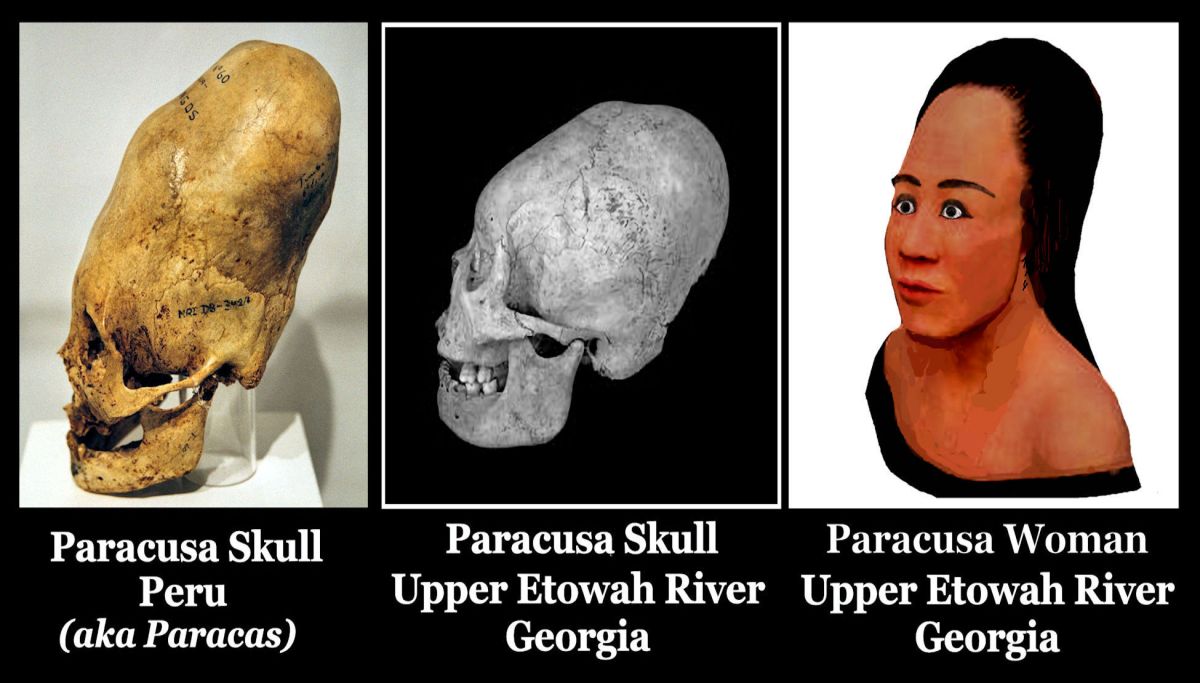
In the mid-twentieth century, three nationally respected archaeologists unearthed large numbers of Paracas skulls in Georgia, but concealed the discoveries from their peers, because they didn’t understand what they had found.
In the past, I have run across several other “forgotten archaeological facts” of the Americas, which were intentionally obscured from the public and the archaeological profession, because they were not compatible with orthodoxy.
For example, While working in Georgia, Warren K. Moorehead [Amherst Museum – 1926], James Ford [Smithsonian – 1934] and Phillip E. Smith [Harvard – 1950] unearthed bronze and/or iron European tools and weapons, deep underground, in the midst of Pre-Columbian Indigenous American artifacts. Earlier, T. F. Nelson [Smithsonian – 1886] unearthed a cluster of beehive-shaped, stone metal smelters with later Native American burials within them in Caldwell County, NC. Yet, all published anthropological texts state emphatically that there is no evidence of a European presence in the Southeast before the Columbus voyages.
This is my first attempt at using my new Forensic Sculpture AI program (woman on the right). I hope that you enjoy it.
The Sea Peoples of the South Atlantic Coast series
by Richard L. Thornton, Architect & City Planner
2021 – Canadian forensic sculpter and anthropologist, Brian Foerster, obtained from three reputable laboratories the DNA results for the egg-shaped Paracas skulls in Peru. Their skulls were different in several ways from other Homo Sapiens, but they were not extraterestials as many “ancient alien astronauts theorists” believed. They were descended from a little known race in southern Ukraine, who were also the ancestors of the Goths, Burgundians, Lombards and Huns.
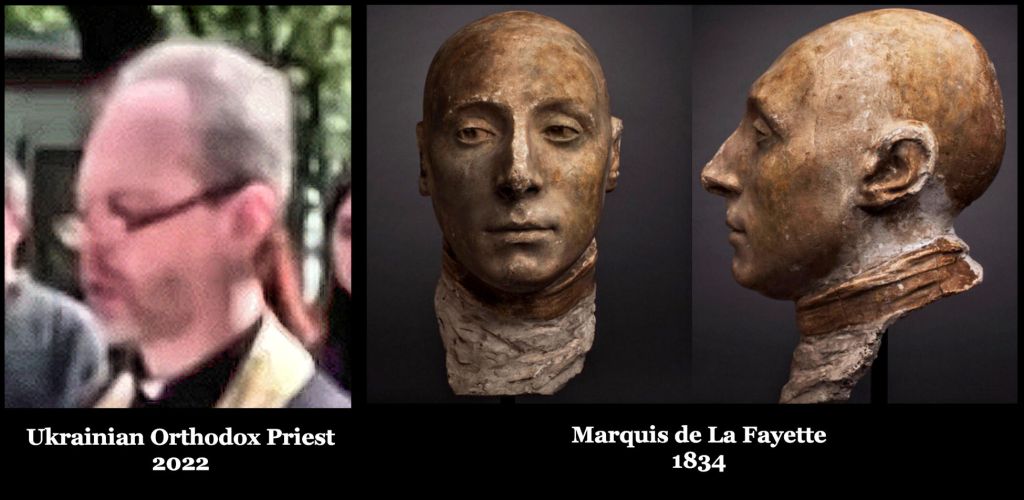
North American anthropologists seem to be totally unaware that the “Paracas” skull still can be seen in southern Ukraine, Hungary, Israel, Turkey and southeastern France. On the left above is a detail of the funeral of one of the first American volunteers to die in the Ukraine War. This is the priest, who presided over the funeral in Kiev.
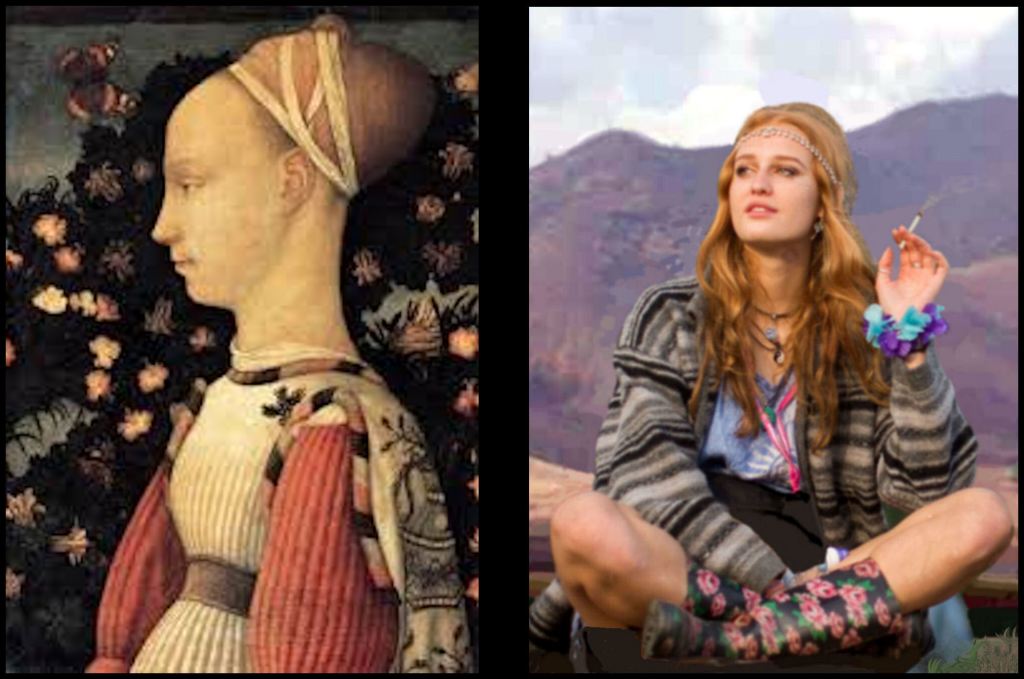
I learned this fact the good ole fashion way in 1970, while getting to know a beautiful Burgundian architecture student from a remote French Huguenot village in the Languedoc region of southeastern France . . . while we were on a bus headed to Oaxaca. Her lovely strawberry blonde hair grew in a spiral around her skull.
There must have been plenty of other people with the same skull in her valley, Yvette was not the least bit self-conscious about it and enjoyed me calling her Queen Nefertiti. She told me that young women with heads like hers were in great demand during the Middle Ages to become the wives of the highest nobility. The French aristocracy even imported Parakusa brides from Hungary and Ukraine.
On the left above is a Burgundian lady of the nobility in eastern France during the Medieval Age. Note that during that time period, the women did practice another form of head deformation in order to give their skulls a “double bottle” appearance.
Paracas is the Hispanization of the Panoan word, Parakusa, which means, “Ocean-Elite.” This was also the word used by several tribal members of the Creek Confederacy in Georgia for their elite families. No anthropologists or archaeologists in the United States seem to be aware that the Parakusa (eggheads) were one of the participants in the “Olmec Civilization” and had villages in Georgia. There are statuettes of them in Mexico’s Museo Nacional de Anthropologia.
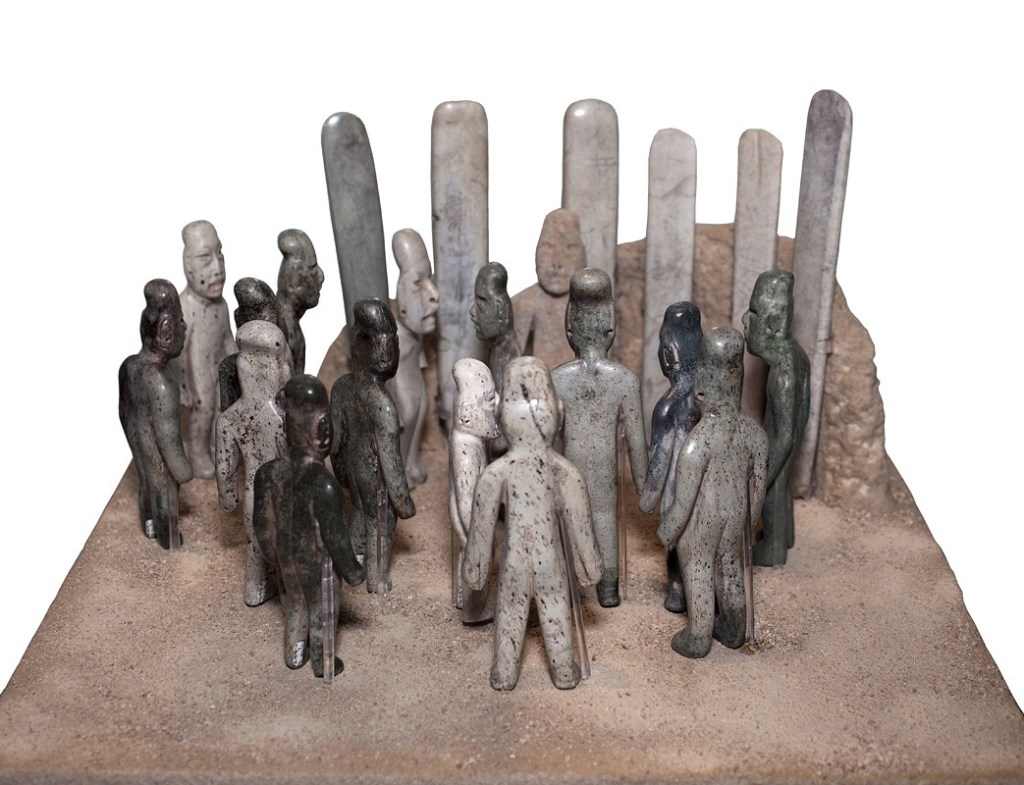
This is a photograph that I took in the “Gulf Coast Gallery” at the Museo Nacional de Antropologia in Mexico City in 1970. They are jade figurines of a group of Parakusa, apparently worshiping or having a political meeting.
Archaeologist Arthur Kelly (1936-7) apparently excavated a Parakusa village on Big Sandy Creek near Indian Springs in Butts County, GA. Big Sandy Creek is a tributary of the Ocmulgee River. For unknown reasons, Dr. Kelly never published a comprehensive archaeological report on the ten years that he worked in the Ocmulgee River Basin.
Kelly’s summary, presented at the 1974 conference at (then) Ocmulgee National Monument briefly mentioned test pits and ditches at a large town on Big Sandy Creek, which contained tall skeletons with large, deformed skulls. He speculated that they were the result of intentional cranial deformation, but could not explain why the skulls were much larger than those of most American Indians. The village site was probably altered by development of the Indian Springs State Park.
Archaeologist Robert Wauchope (1939) encountered Parakusa skeletons at a large town site on the Etowah River in the Allatoona Mountains. He only dug test pits and ditches. Wauchope initially assumed that the odd skulls were the result of crainial deformation, but then unearthed the skeletons, of toddlers, newborn babies and fetuses, which had the same odd shape. He was puzzled by the skulls, but did not have time to fully excavate the entire village. He ultimately decided that the entire village was composed of people with birth defects.
Of the three mid-20th century archaeologists mentioned here, Wauchope was the only one to publically publish his discovery of a town with unusual skeletons. Unfortunately, his Archaeological Survey of Northern Georgia was not published until 1966. That gave 27 years for universities to brainwash North American anthropology students into believing that the only place in the world where people had strange looking skulls was in Peru and this odd appearance could only be achieved by binding a wood board to a toddlers forehead.
Joseph Caldwell and his archaeological team fully excavated the same large village in 1947. This was during the archaeological survey of the Lake Allatoona Basin, financed by the US Army Corps of Engineers. They excavated over 1000 skeletons. All adults were tall and had egg-shaped craniums. Initially, Caldwell also assumed that the occupants of this town practiced deformation of the forehead, but soon, like Wauchope, encountered toddlers, new borns and fetuses with the same-shaped skulls. He eventually decided that the entire town was plagued with Hydrocephalus (water on the brain. Caldwell said little about the skulls in his report.
That anything is known about this discovery, we can thank the Red & Black Student Newspaper at the University of Georgia. Because of a tip from an archaeology student, Caldwell was interviewed by the newspaper and a photograph of a skull was published along with the article.
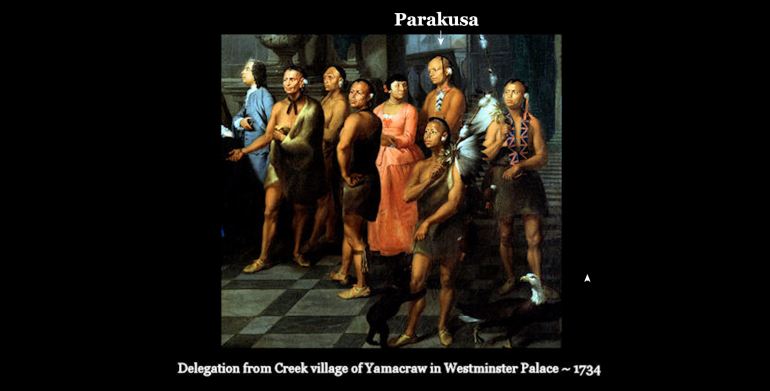
There were still some 7-feet tall Parakusa giants around in Georgia in the early 1700s.
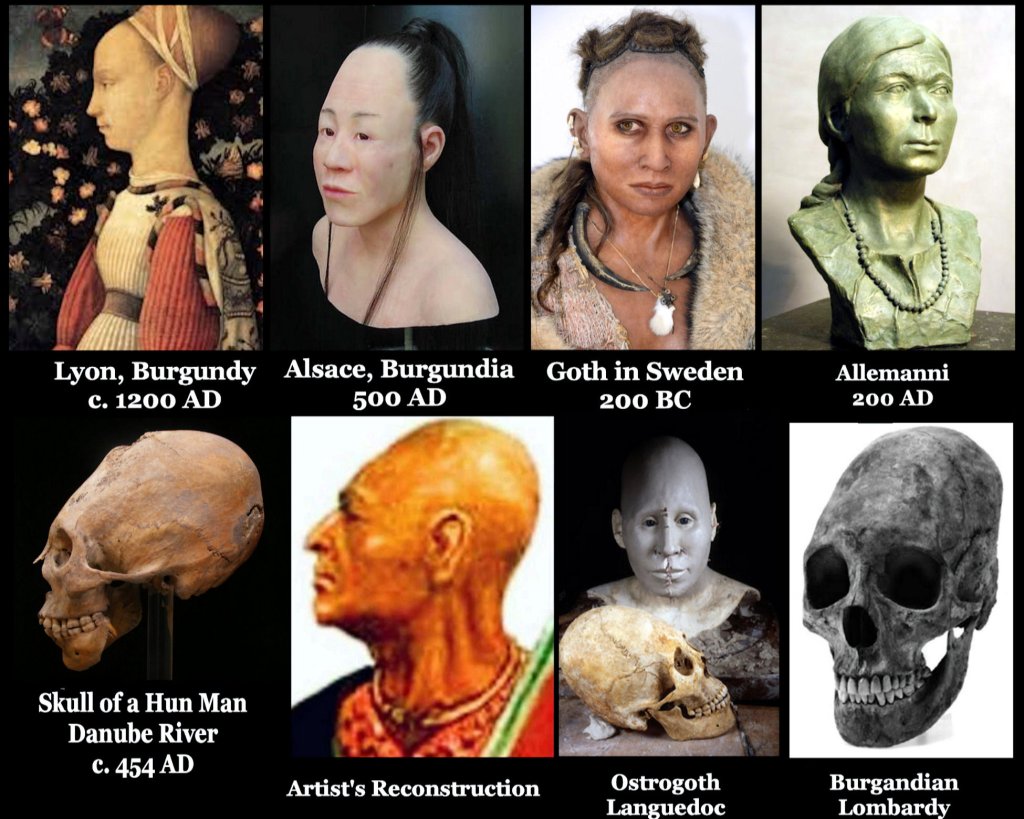
The Parakusa in Europe
It seems very odd that apparently no one within the anthropology profession in North America is aware of the widespread presence of “eggheads” in European history. Indeed, the profession seems determined to conceal and challenge the DNA results obtained by genetics laboratories in any way possible. Some anonymous folks are even going on Wikipedia and altering articles about the Burgundians, Goths, Lombards and Huns to say that these peoples practiced forehead deformation. It is highly unlikely that either the parents of the Ukrainian priest or the Marquis de Lafayette bound a board to their heads, when they were toddlers.
Now you know/!


Thank you for this article. I haven’t had much time to catch up with you recently, and this is very interesting.
I have a somewhat related question, re “Parakusa, which means, ‘Ocean-Elite.’ This was also the word used by several tribal members of the Creek Confederacy in Georgia for their elite families.”
Do you have a sense that the word ocean in this regard, in Creek, might mean immense, grand, or something like that, or might it mean something actually connected to the ocean? Still very interested in the Polynesian connections via the ocean.
Regards,
Lou-Anne
Lou-Anne Fauteck Makes-Marks, Phd
LikeLiked by 1 person
Para, if accented like the current state in Brazil, Para’, can also mean the Amazon Basin. Being that these people spoke a Panoan language from eastern Peru, that could me the actual meaning. On the other hand, it could mean “ocean”, They came via the ocean but passed through the western portion of the Amazon Basin prior to reaching North America.
LikeLiked by 1 person
Interesting as always. Thanks for getting back to me.
LikeLiked by 1 person