This island in South Florida was sculpted from sea shells!
It is an extraordinary example of Indigenous American architecture that thrived for over 1700 years, despite be struck at least 240 times by hurricanes.
by Richard L. Thornton, Architect & City Planner
Two decades later
Twenty years ago, the Muscogee-Creek National Council retained me to provide verbal descriptions and 3D architectural drawings of several Native American town sites in the Southeast that had recently been in the news. Most of these former town towns were in Georgia, western North Carolina or eastern Tennessee, thus were most likely ancestral to the Muskogee Creek Nation or Seminole Nation, because their names could also be found among Muskogean tribal towns in Oklahoma. .
We were less certain about the Pre-Columbian towns in Alabama and Florida. I was ultimately able to report that Moundville, AL was ancestral to the Chickasaw. Some Florida Apalachee had migrated to Northeast Georgia and later been absorbed into the Creek Confederacy. Most moved to Louisiana and in time, assimilated into the state’s Mestizo population. Most of the Indigenous peoples of southern Florida died of European diseases, some were captured by the Cherokee and sold as slaves. Some moved to Cuba, while others, living in the interior of Florida merged with the Creek immigrants.
I did find something intriguing. Until forced to change their name, by the federal government in the 1950s, the Indigenous people living in the southern tip of Florida, from the Everglades, southward, traditionally called themselves Mayas. The Bureau of Indian Affairs was afraid that if the United States had a federally-recognized tribe, named Maya, the United States would soon have over a million Mayas living here. That has happened anyway. Georgia contains over 300,000 people with substantial Maya ancestry. That does not county all of the Creek-Seminole descendants. All of my Native American ancestry is from southern Mexico.
In 2006, very little was known about the Calusas and even less about Mound Key, where their capital was located. Archaeologists were beginning to work there, though, and their discoveries were getting in the news. My 3D drawing of Mound Key was highly speculative and it turns out, inaccurate.
SLIDE SHOW
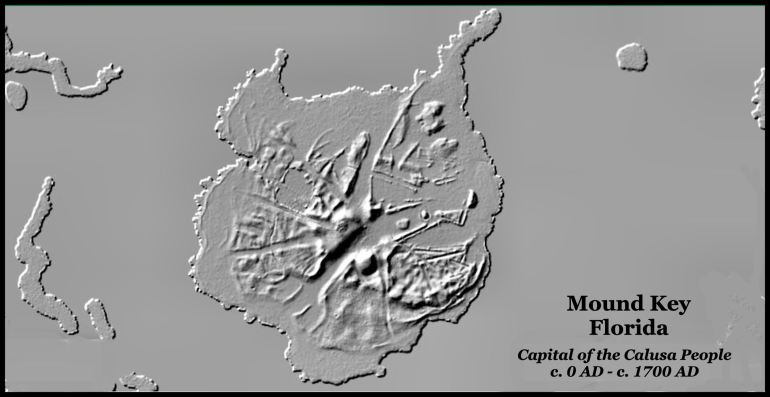
The high resolution USGS LIDAR program that I utilize in the Georgia Mountains, displayed many detailed man-made physical feathers that have been missed by archaeologists. Analysis of the LIDAR scanned revealed that the Calusa used the same construction techniques as the Mexica (Aztecs). They constructed sturdy outer walls out of seashells, probably mixed with crude hydrated lime and sand. Loose sand and debris were dumped within the shell walls.
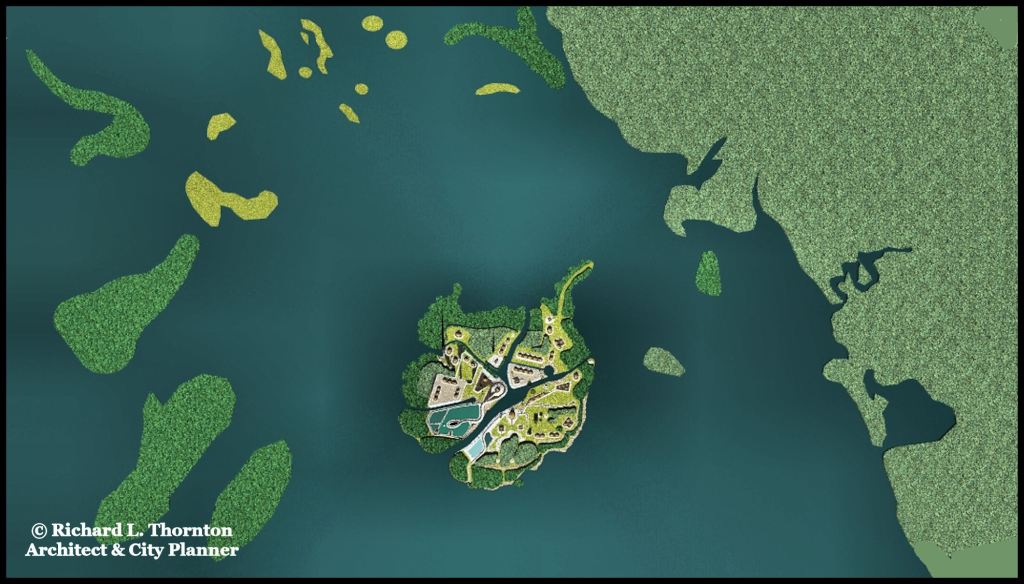
Mound Key is located in Estero Bay, west of Fort Myers Beach, FL. It can only be accessed by boat.
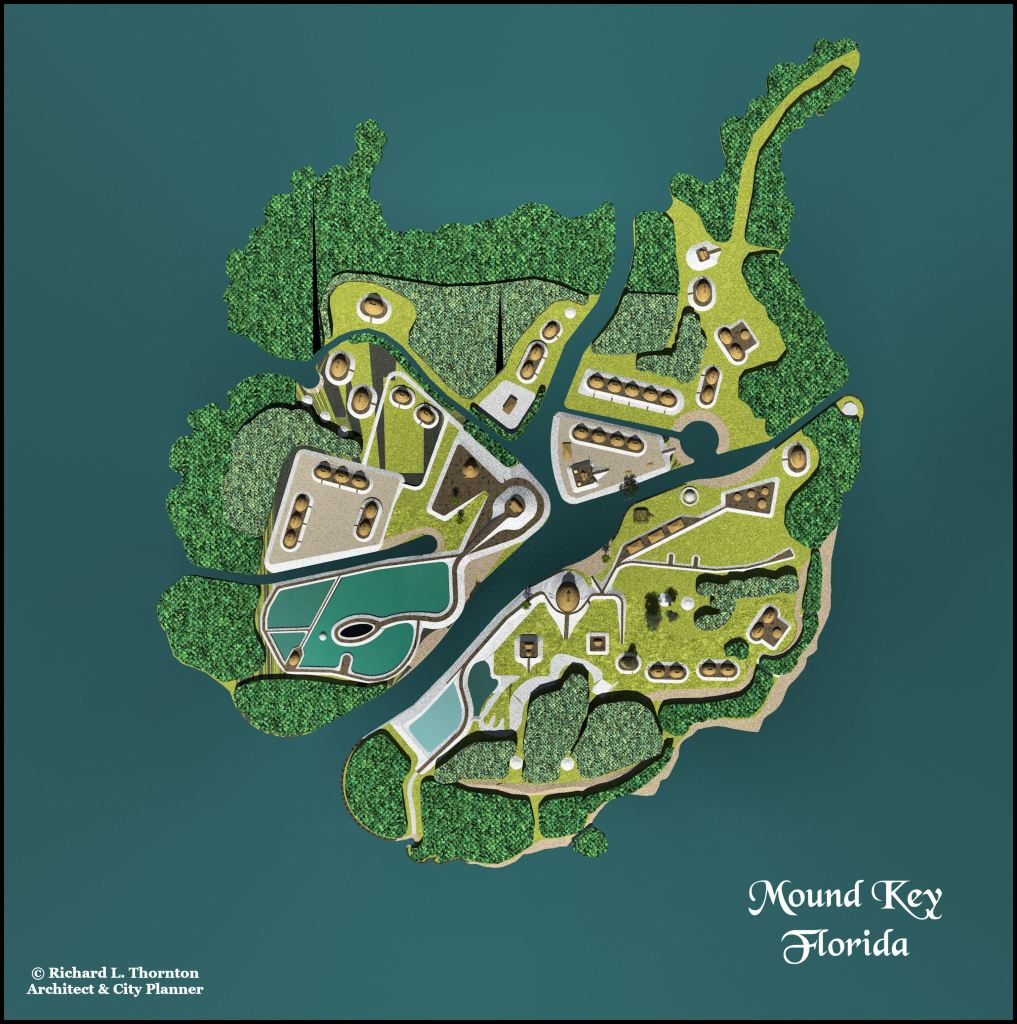
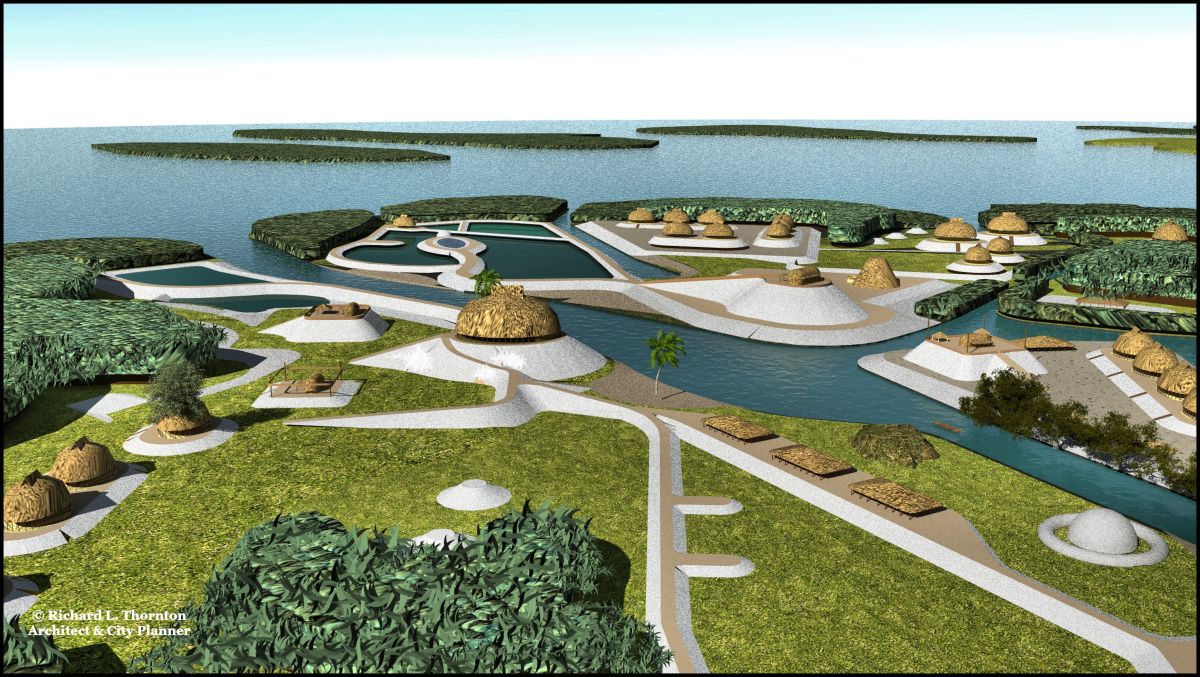
The dense groves of mangrove trees around the edge of the island and along canals played a major role in protecting the occupants from the tidal surges of major hurricanes. Archaeologists have speculated that the ponds on the southside of the island were “fish farming” operations. The smaller ponds may have stored salt-free rainwater for the inhabitants. At the present time, it is believed that there were never any freshwater springs or streams on this island.
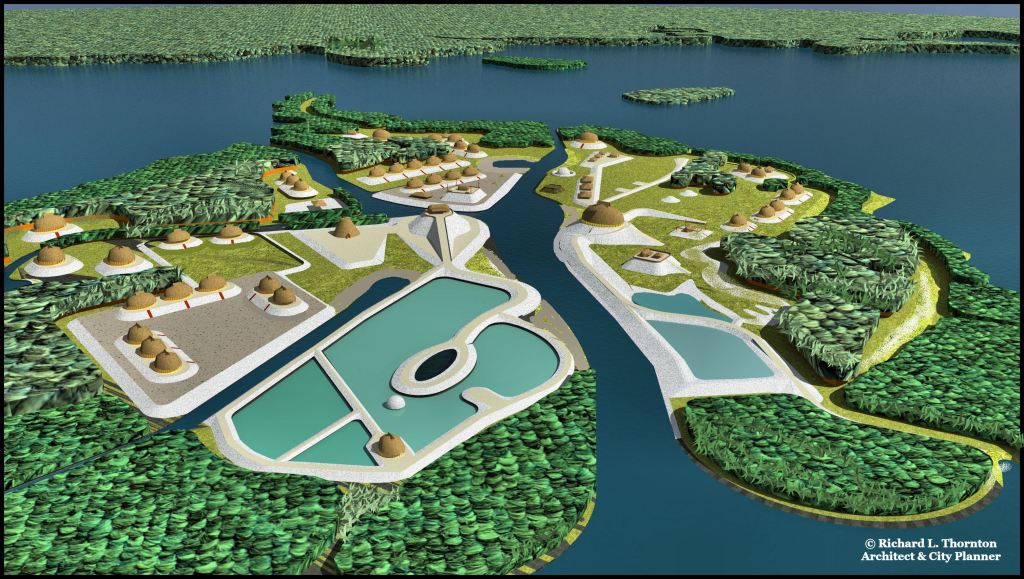
Here is a closer view of the main canal and ponds.
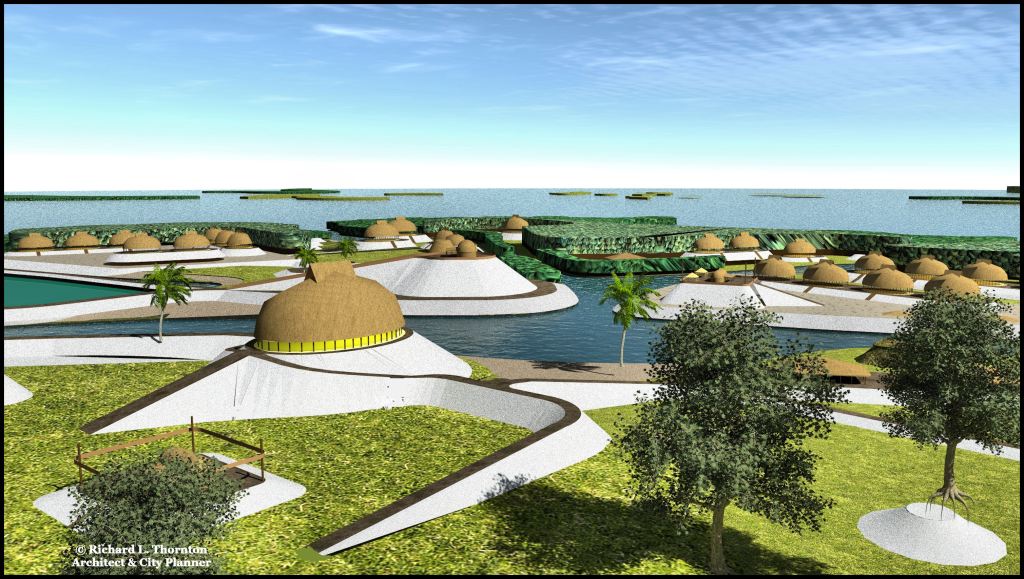
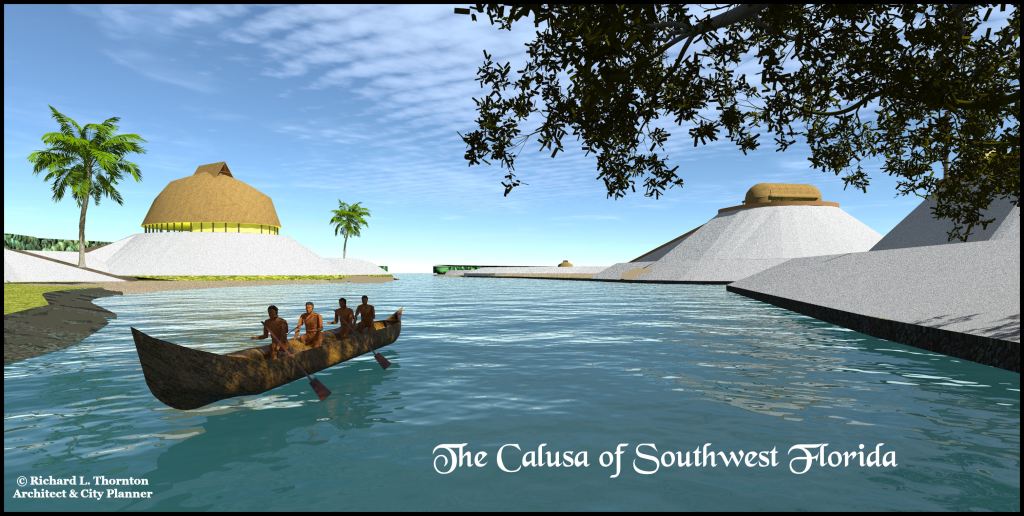
The largest “oka” (in the foreground) was an assembly hall, which could hold all of the residents of the island. Smaller okas were apartment buildings, where between 50 and 500 Calusas lived. All of the okas were placed on top of shell mounds, which protected the occupants from hurricane tidal surges. Not that the neighborhoods on the islands were interconnected by causeways that were taller that typical tidal surges.
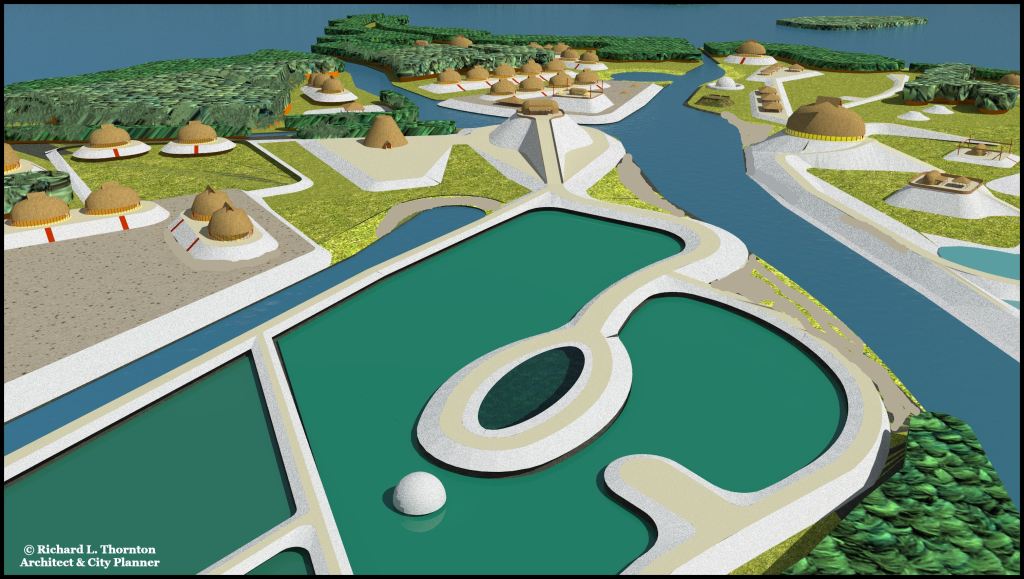
This is the Temple of the Sky Serpent God. Such temples and accompanying serpent shaped earthworks are found as far north as the Nacoochee Valley in Northeast Georgia. The Sky Serpent was the most important deity of the Chontal Mayas.
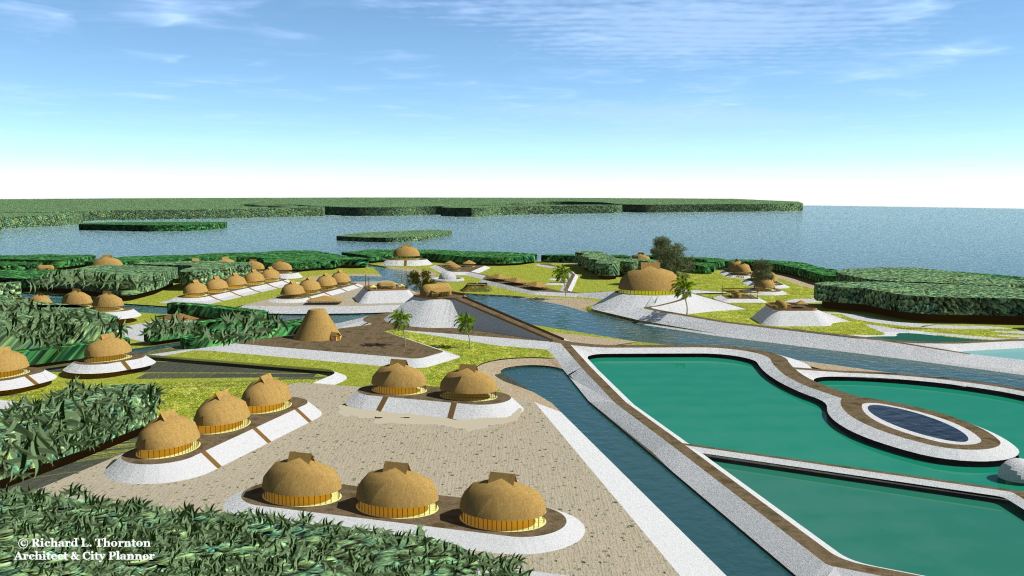
A view of the okas on raised platforms.
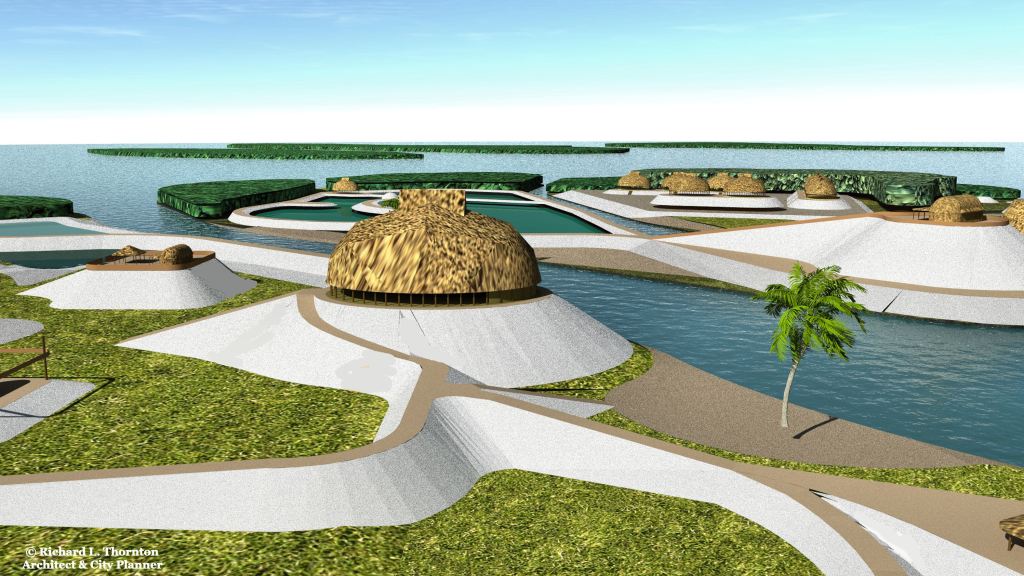
Another view of the massive oka, which served as an assembly hall. Architectural styles at Mound Key suggest that the original population was a mixture of Tupi-Guarani and Carib peoples from the Amazon Basin. They later were joined by Chontal Maya merchants and mariners.,
 The Americas Revealed